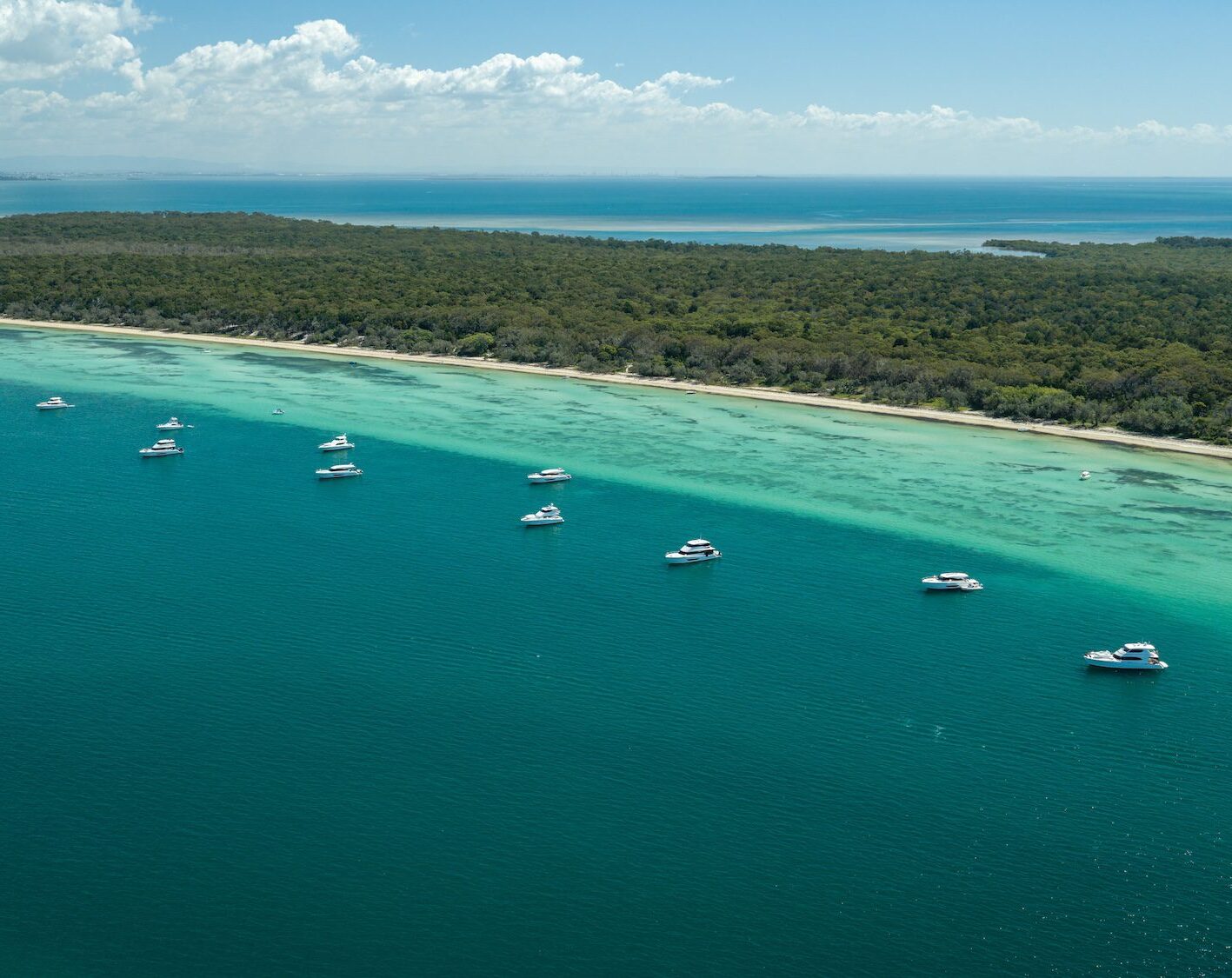
There are cruising grounds that reward you with beautiful anchorages, good fishing and quiet beaches. Then there is the Kimberley.
This is one of the last true wilderness areas on Earth. A place where nature remains largely untouched. Across the far north-west of Australia, this remarkable and expansive coastline presents an entirely different proposition, with towering red sandstone escarpments dropping directly into the sea, immense river systems disappearing deep into the interior, waterfalls tumbling from ancient plateaus, and tides capable of transforming a tranquil passage into rushing water within hours.
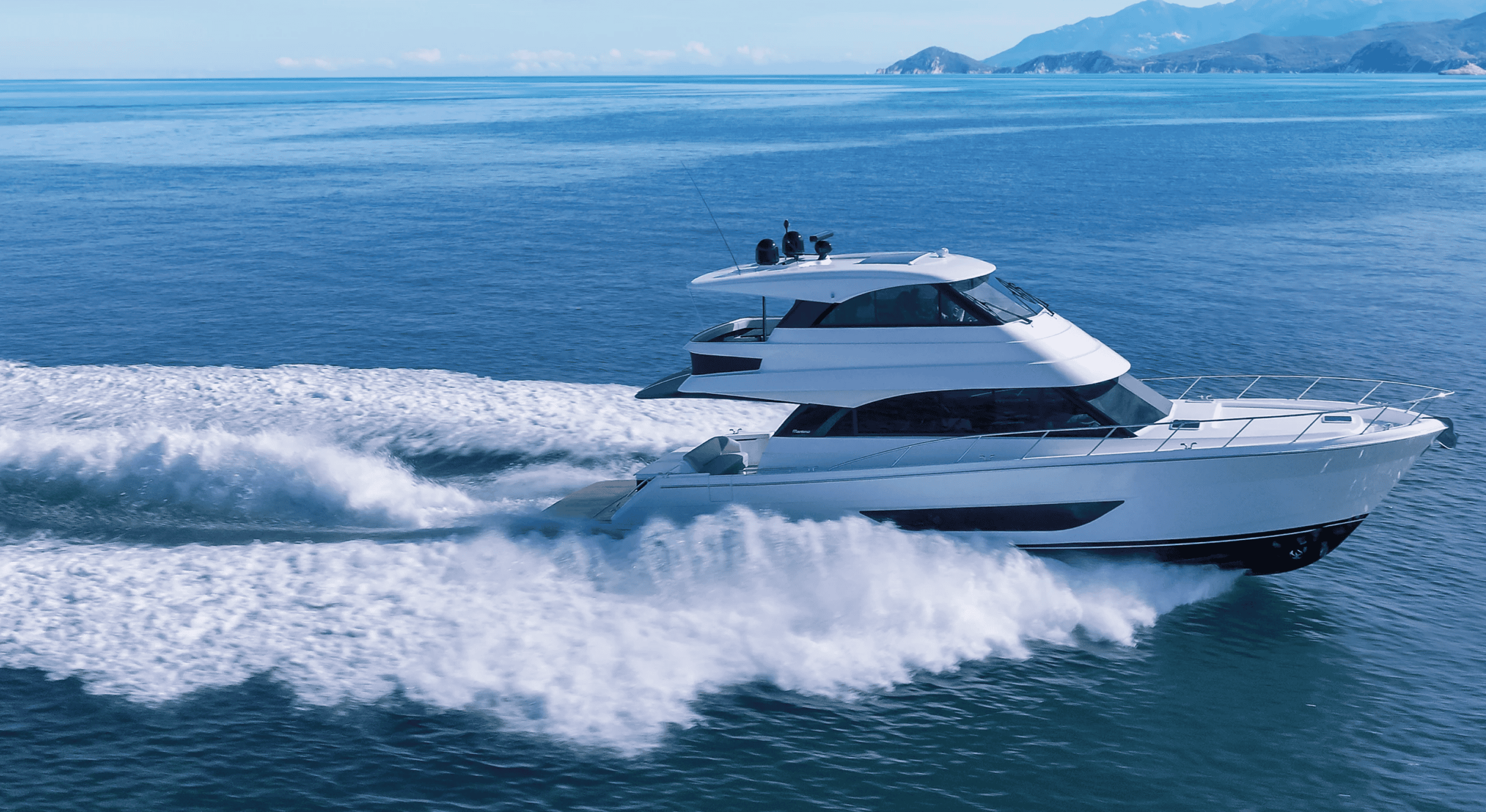
For the owner of a Maritimo with its long-range capabilities, the Kimberley represents one of Australia’s ultimate cruising destinations.
Into the Kimberley
For luxury motor yachts approaching from Australia’s west coast, Broome provides the logical gateway. From here, the Kimberley coastline stretches north-east towards Cape Leveque, the Buccaneer Archipelago, and the remote northern Kimberley, before eventually reaching the Cambridge Gulf and Wyndham.
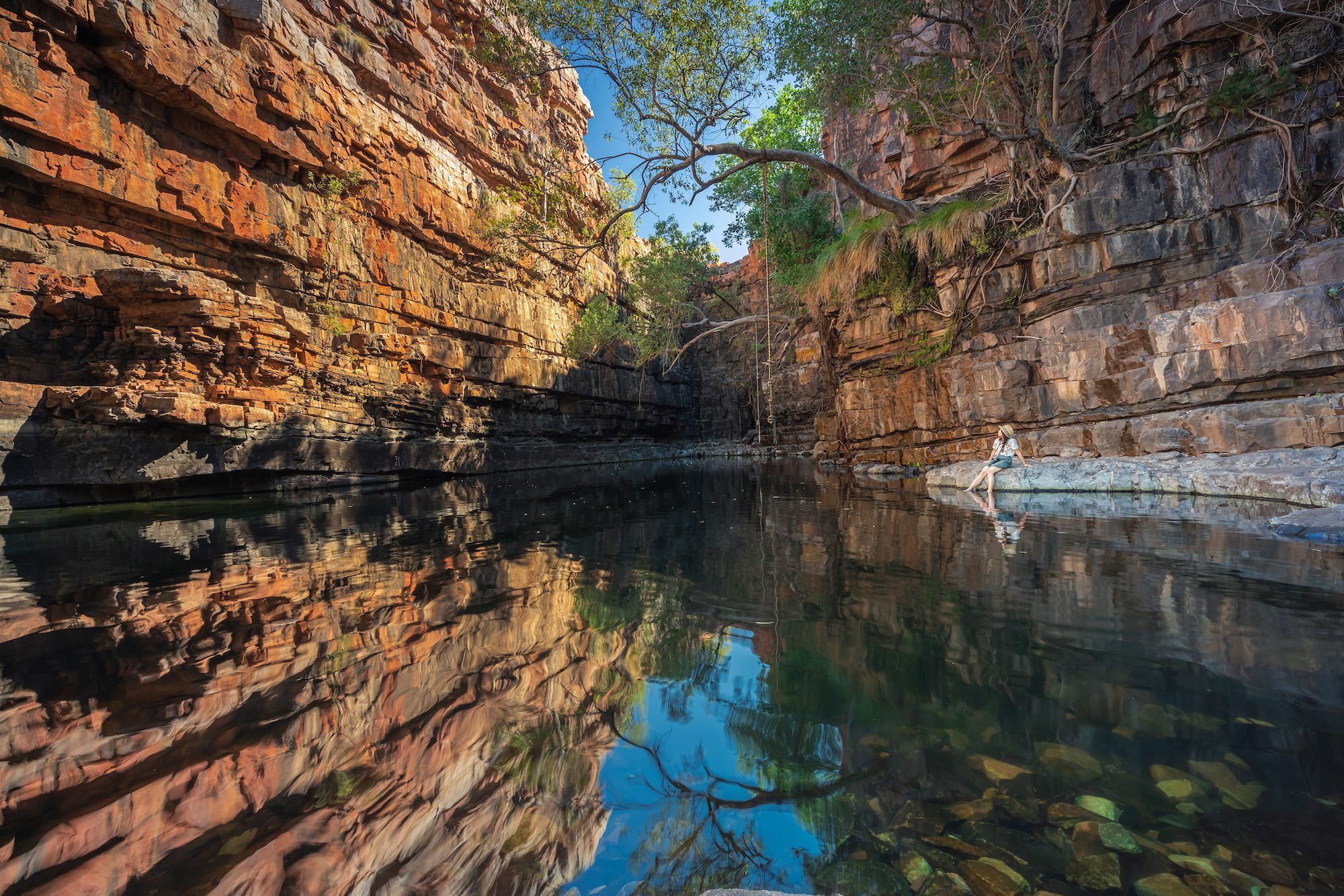
The scale becomes apparent when its extraordinary network of islands, bays, rivers and inlets is considered, with more than 1,000 islands making up the Buccaneer Archipelago alone.
The real Kimberley, is found by leaving the obvious route and allowing time to explore. An insignificant-looking river entrance can lead through kilometres of spectacular sandstone country, while a narrow creek might open into a completely protected anchorage. Behind another headland could be a beach where there is no indication anyone has visited.
Attempting to rush a Kimberley passage largely defeats the purpose. Two weeks provides an introduction, but three weeks or more allows the voyage to develop its own rhythm, with tide, weather and landscape gradually taking precedence over a rigid itinerary.
A World Governed by Tides
Perhaps nothing defines Kimberley boating more than its tides. Northern Western Australia experiences some of the world’s largest tropical tidal movements, and the enormous volume of water moving through bays, channels and river systems creates powerful currents, whirlpools and waterfalls that can appear and disappear within hours. Instead of simply asking where to go tomorrow, the more important question often becomes where you need to be for a given tide.
One of the most famous demonstrations occurs at the Horizontal Falls (Garaan-ngaddim), in Talbot Bay. Here, water is forced through narrow gaps in the McLarty Range and, as the tidal level changes on either side, enormous quantities of water squeeze through the passages, creating the impression of a waterfall lying on its side.
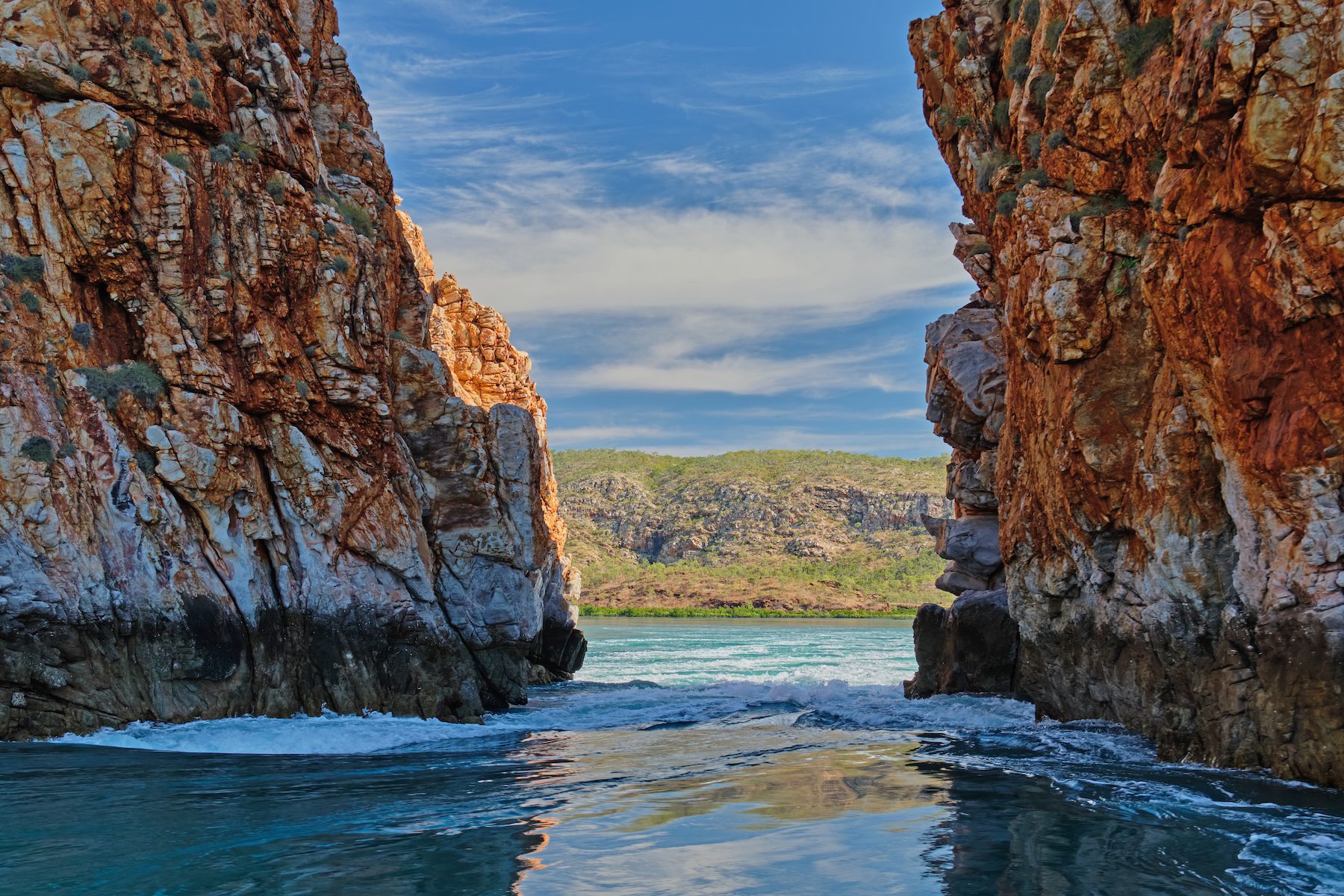
It is undoubtedly very spectacular, but also demonstrates an important principle of Kimberley cruising: water that appears manageable at one stage of the tide can be entirely different several hours later. Understanding tidal streams and carefully planning passages are fundamental to operating safely in these waters.
Buccaneer Country
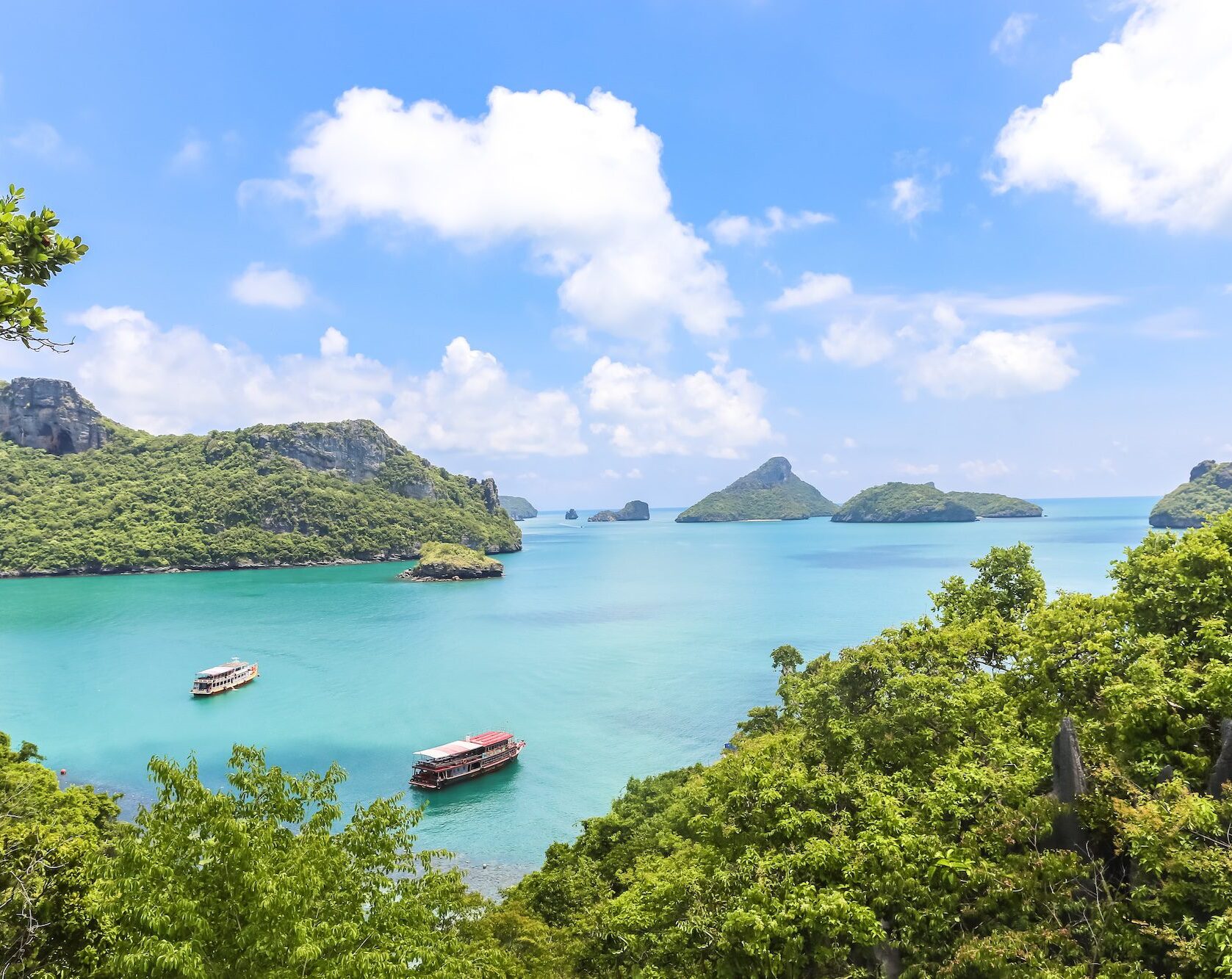
North of the Dampier Peninsula lies the Buccaneer Archipelago, where more than 1,000 islands create a labyrinth of channels, passages and protected waterways, all seemingly made for exploration by luxury motor yacht. Red rock rises directly from brilliant blue water. Islands overlap until it can be difficult to distinguish the mainland from the archipelago, and narrow channels suddenly open into enormous bays.
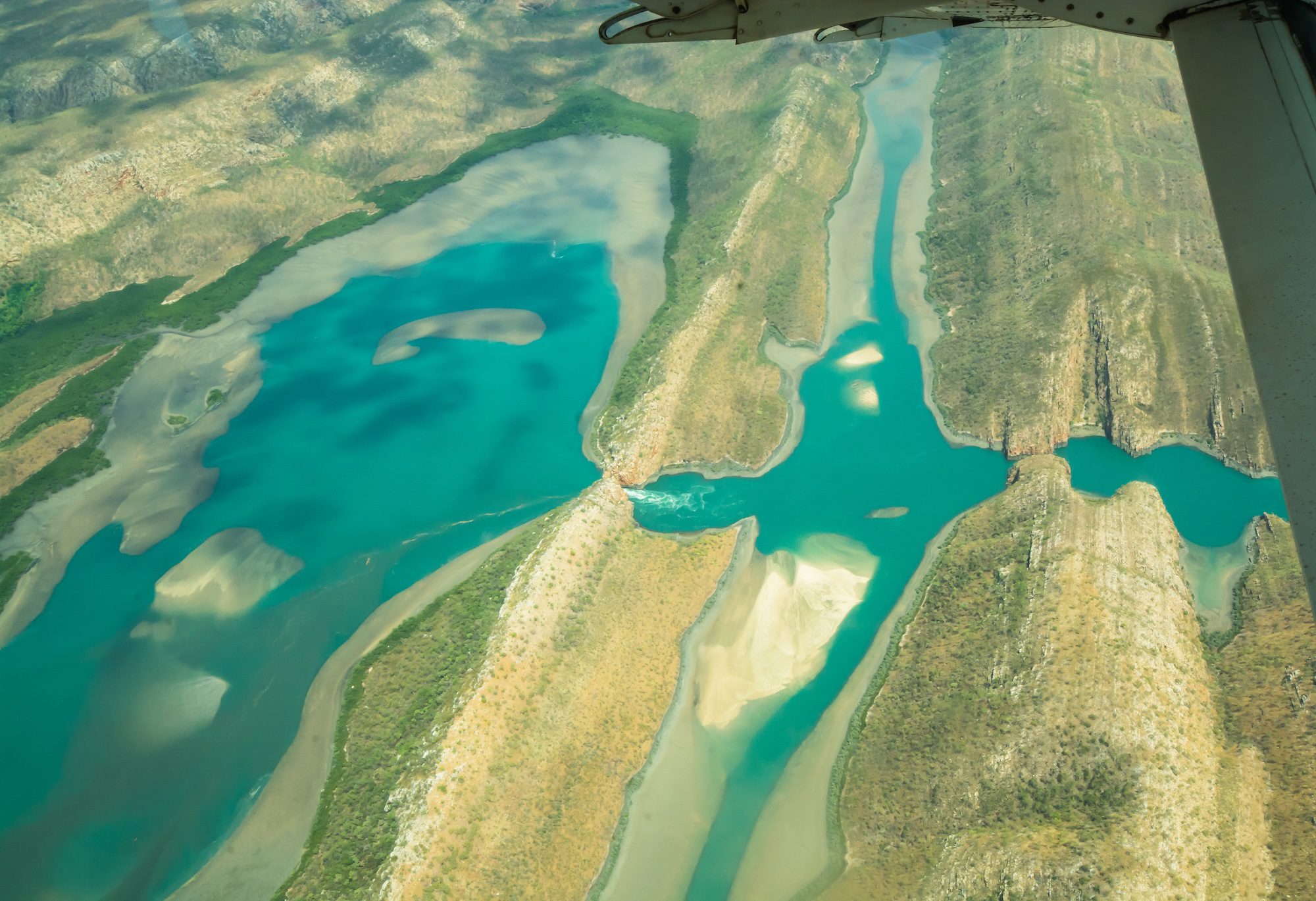
Here the tender becomes almost as important as the mothership. Once your Maritimo luxury motor yacht is securely anchored, the tender provides access to creeks, beaches, fishing grounds, and passages, where taking a larger yacht would be neither practical, nor sensible.
Montgomery Reef
Few places demonstrate the scale of the Kimberley’s tides more dramatically than the Montgomery Reef. At high water much of the reef is submerged, but as the tide falls the landscape changes dramatically. Water pours from the emerging reef in countless cascades, channels become increasingly defined, and enormous areas appear to rise from the sea.
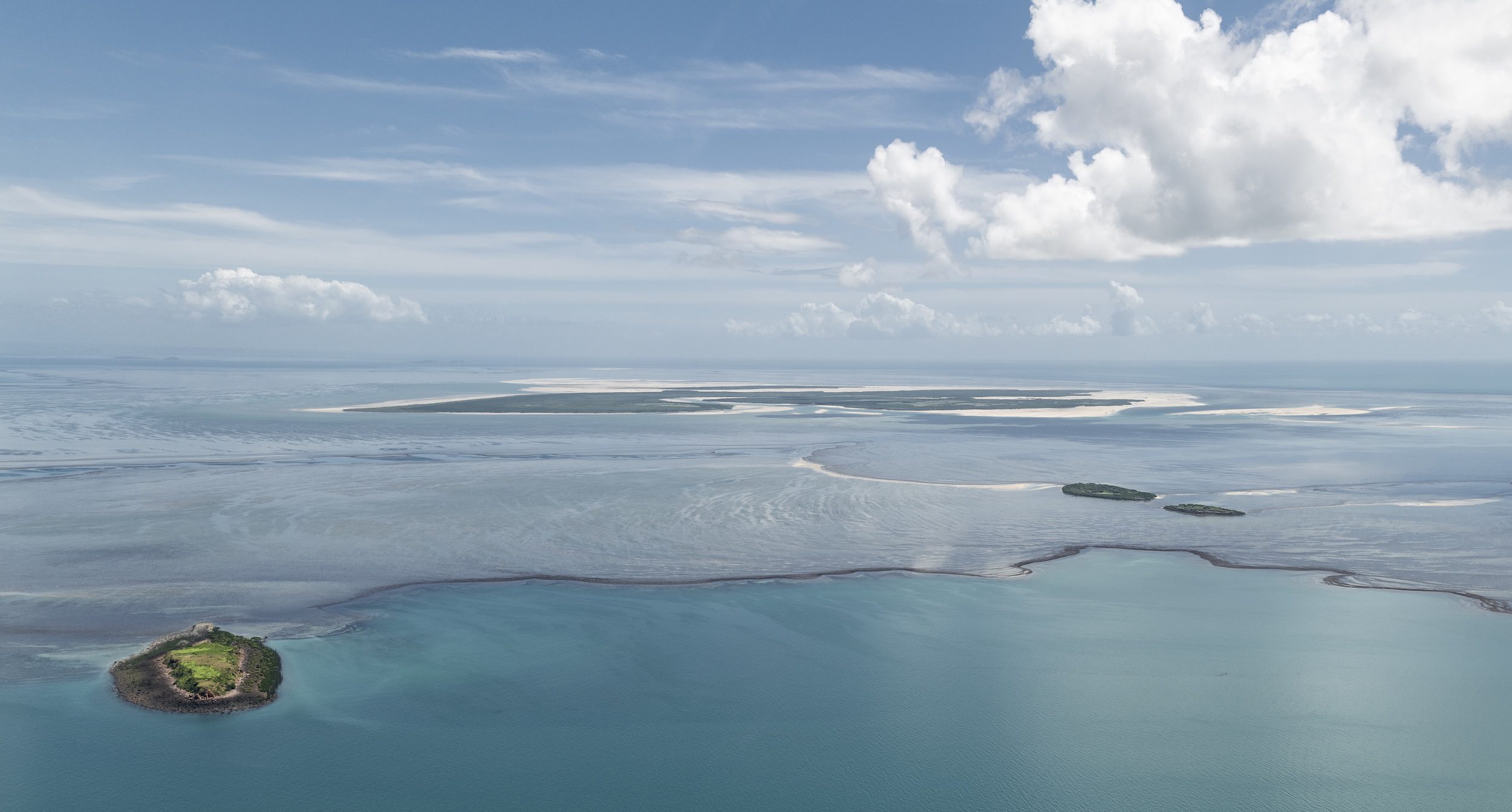
Exploring Montgomery Reef by tender is one of the Kimberley’s defining experiences, but it is also an important cultural and ecological site within the protected Lalang-gaddam Marine Park. Sanctuary zones and marine-park restrictions need to be understood before arriving, while culturally significant areas should always be approached with respect. This is not simply wilderness waiting to be discovered; it is Country with a human history extending back tens of thousands of years.
The Prince Regent River
Further north again, and the Prince Regent River demonstrates what becomes possible aboard a capable long-range motor yacht. The river cuts deep into the landscape, bordered by imposing sandstone cliffs, and entering aboard an ocean-going vessel creates the unusual sensation of taking your home deep into Australia’s interior.
King Cascade is one of the river’s best-known attractions, while nearby Careening Bay provides a link with Australia’s maritime history. In 1820, Phillip Parker King’s vessel, Mermaid, was careened there for repairs, and the famous boab marked with the vessel’s name remains today.
Into the Northern Kimberley
Continue towards the northern Kimberley, and the scale seems to increase again. The Hunter River and surrounding country deliver immense sandstone escarpments and mangrove systems, while farther north the King George River provides one of the great finales to the journey. Entering between imposing rock walls, the river winds inland towards King George Falls, where early in the cruising season the twin falls can carry enormous volumes of water following the summer rains.
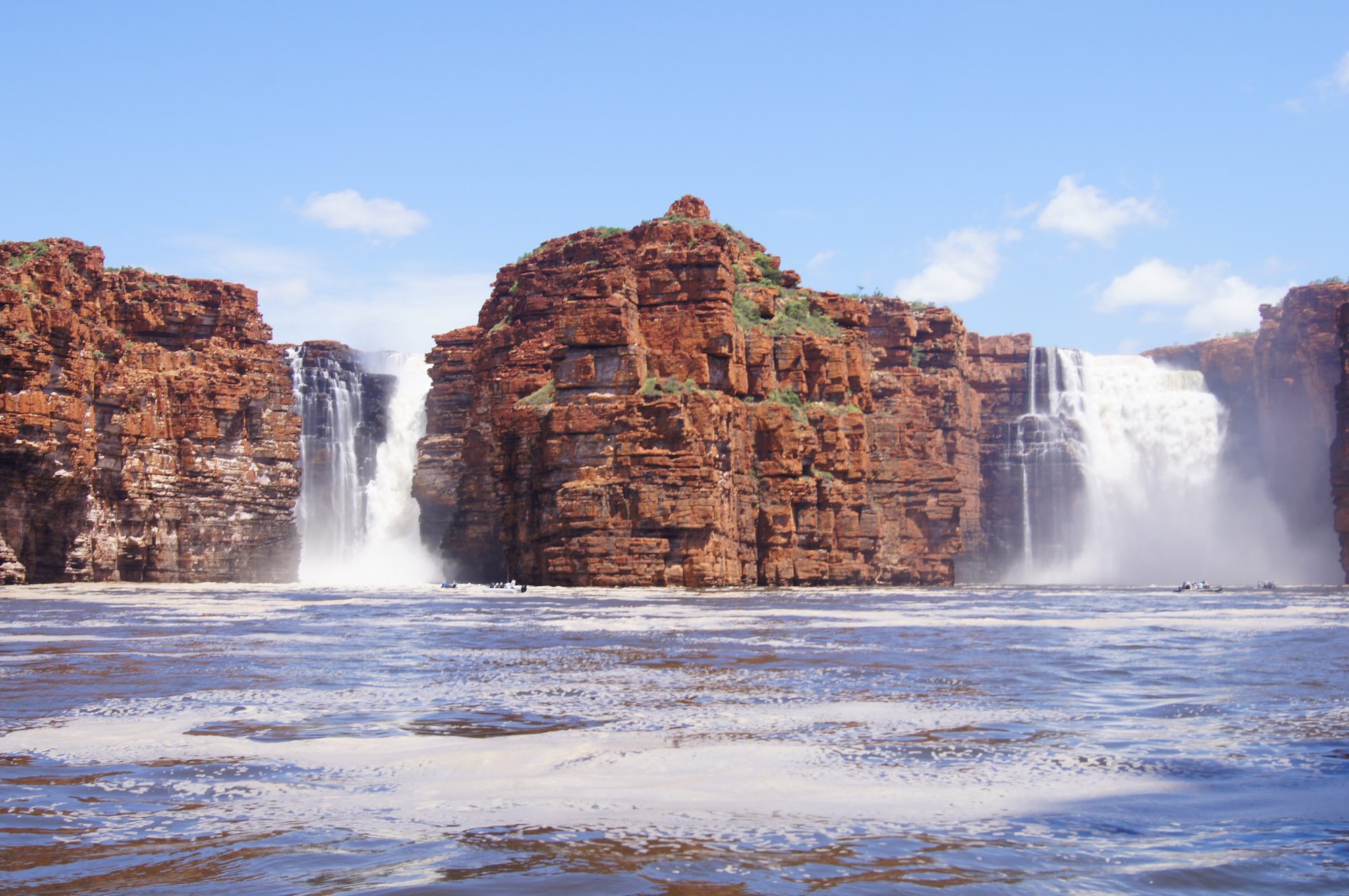
Approaching the falls by tender beneath cliffs glowing orange in the morning or late-afternoon light is one of those boating experiences photographs struggle to convey. Yet the Kimberley’s most memorable moments are often not individual destinations, but combinations of circumstances: the silence of an anchorage after sunset, first light striking a sandstone escarpment, a crocodile sliding from a muddy bank, or the sudden strike of a barramundi. Alternately, it might simply be dinner on the aft deck while the landscape turns from orange to deep red, with no artificial lights visible anywhere along the horizon.
When to Cruise
Timing a Kimberley voyage is critical, with the principal cruising season generally extending from around March through to November, outside the tropical wet season and its associated cyclone risk. Those wanting waterfalls at their most spectacular will find the earlier months particularly appealing, when the wet season has replenished rivers, and the surrounding country retains more of its green colour. The trade-off is that you will have to endure greater heat and humidity.
Through June, July and August, conditions generally become cooler and more comfortable for extended exploration. Waterfalls progressively diminish, but these months provide excellent conditions for fishing, exploring creeks, and visiting remote beaches. They also coincide with humpback whales moving along the coast, with Camden Sound particularly significant as a calving and nursery area. By September and October temperatures begin climbing again, so there is no single perfect month; the choice depends on whether waterfalls, cooler conditions, fishing, or wildlife are the priority.
Built Around Self-Sufficiency
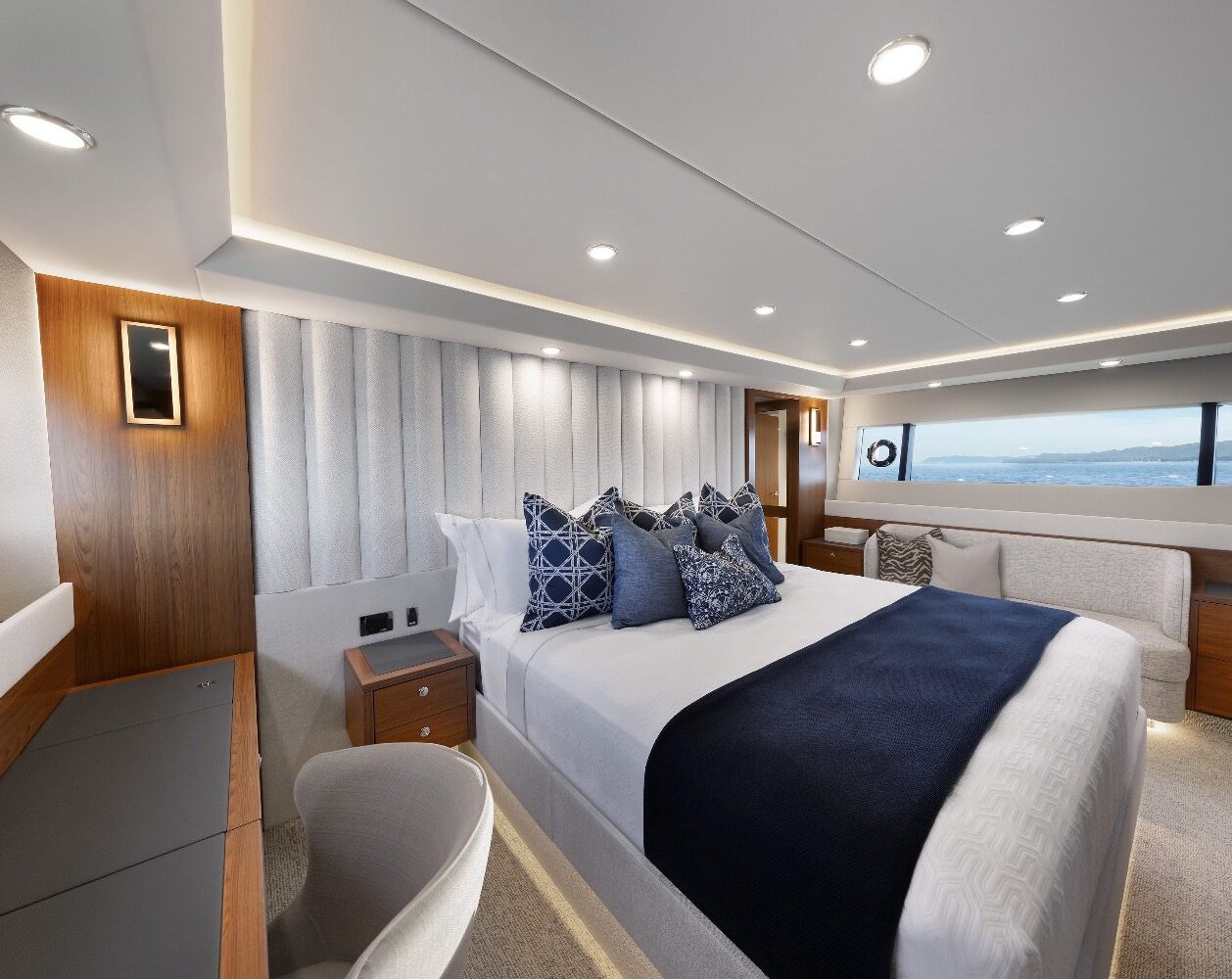
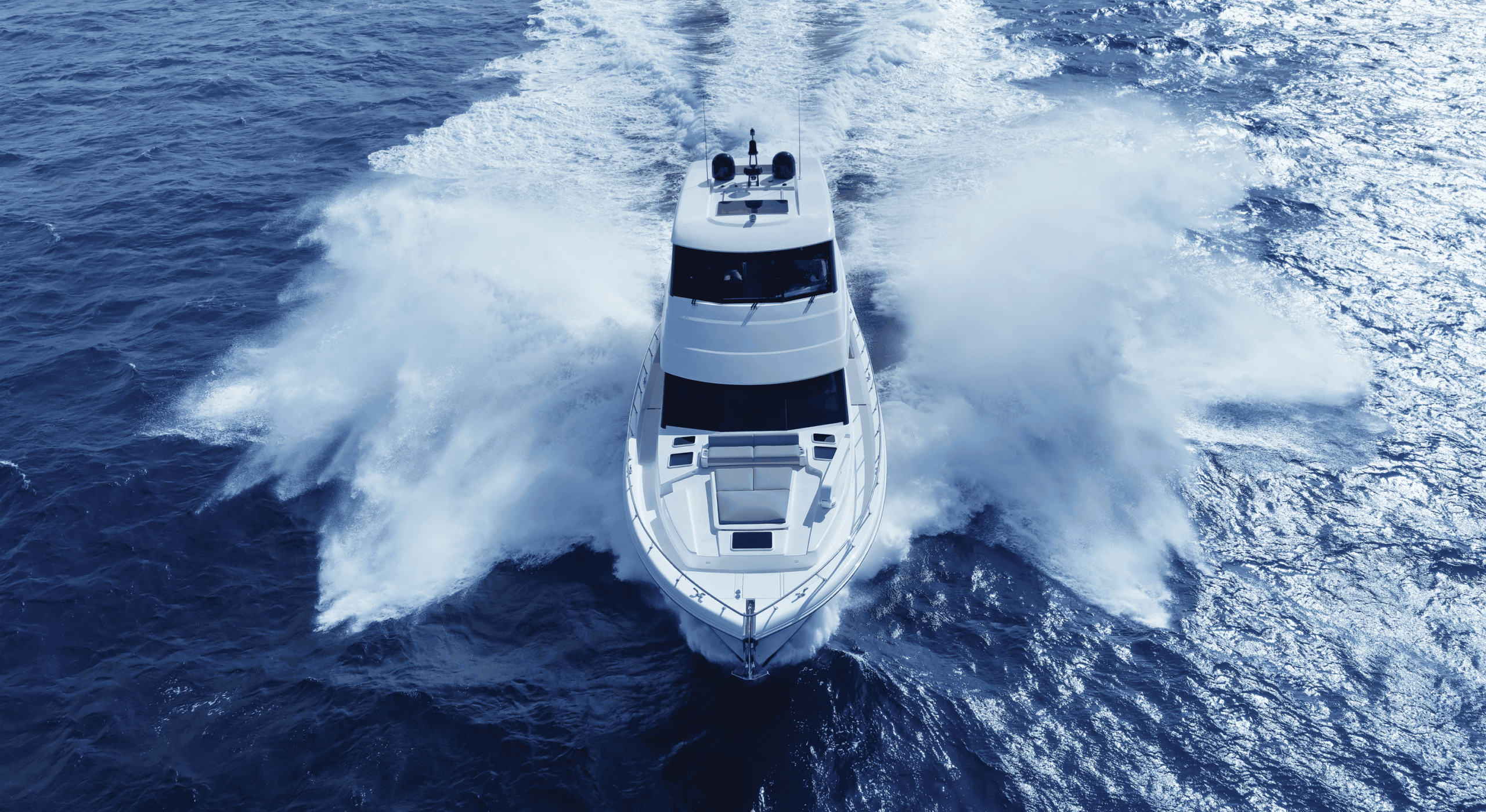
Generous fuel capacity, range, refrigeration, freezer, water production and storage allows provisioning for weeks rather than days. A vessel capable of efficiently covering considerable distances allows owners to explore, rather than continually calculate how soon they need to return to civilisation.
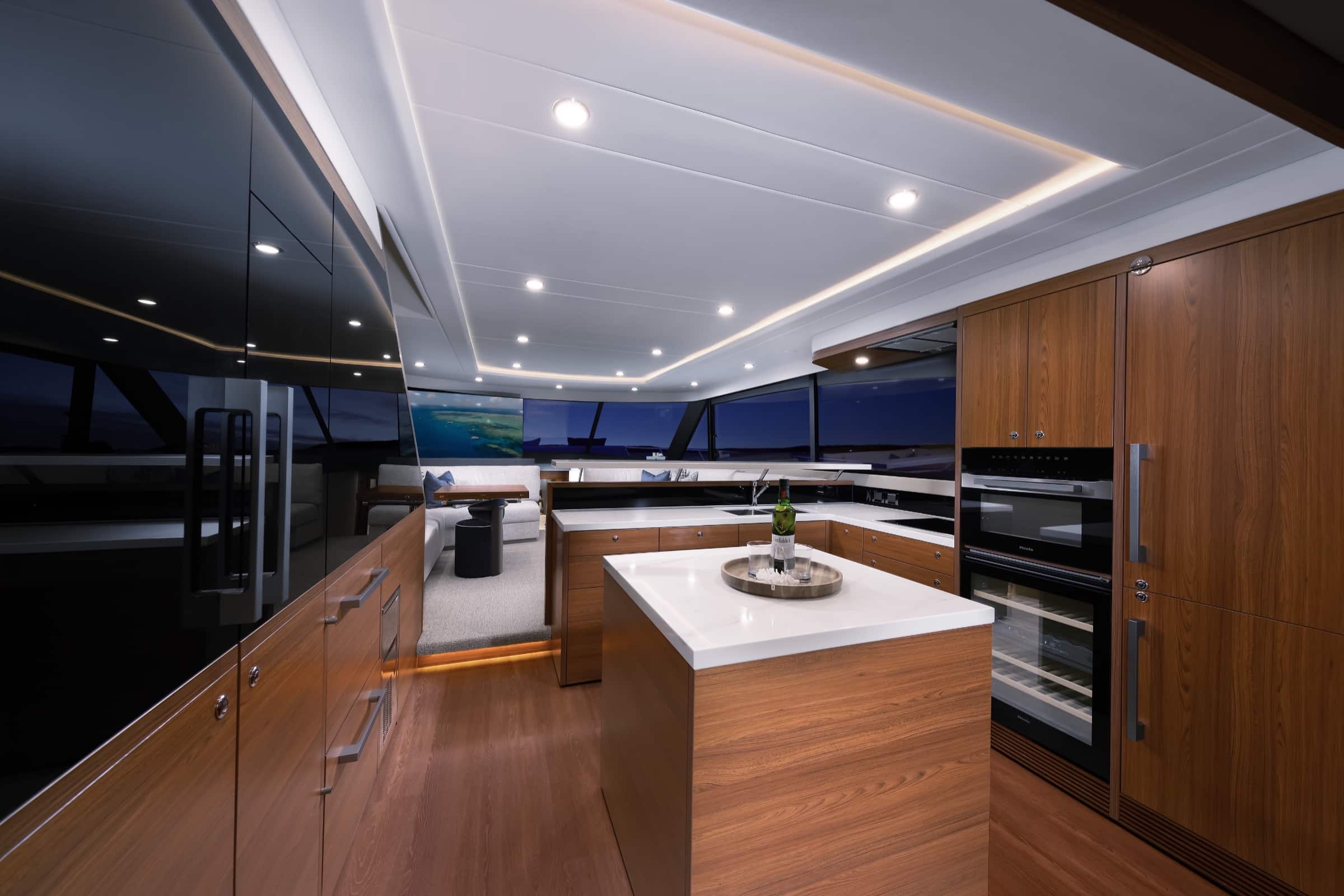
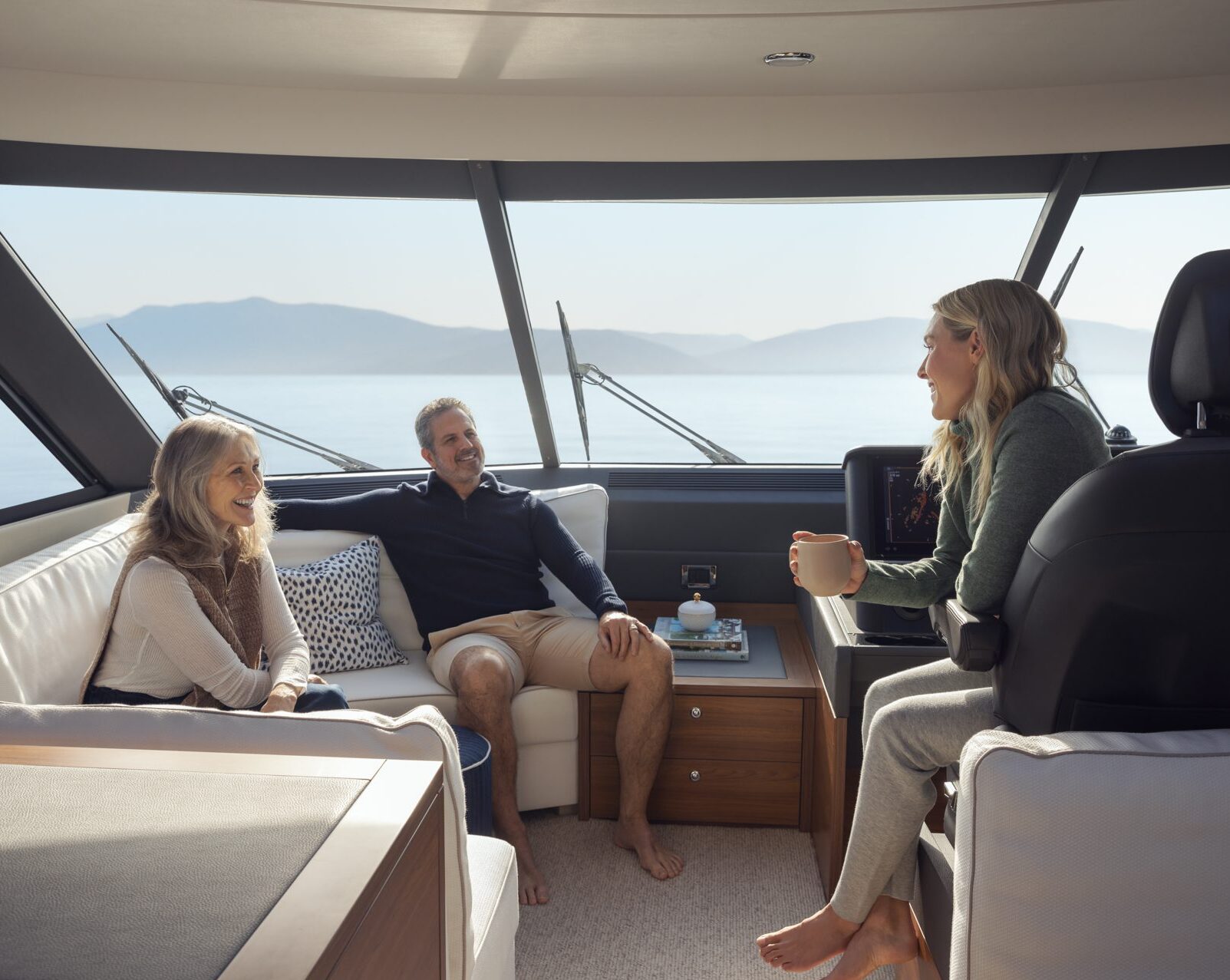
Substantial tenders are essential to taking advantage of all the Kimberley has to offer. Tender handling systems become particularly important because it may be used several times each day, while stabilisation can transform both passages and nights at anchor. The Kimberley is not about travelling quickly; it is about having the capability to travel substantial distances efficiently, arrive with reserves on hand, and then remain there comfortably. It is precisely the type of cruising where the long-range capability, self-sufficiency, and on board amenity and liveability of a Maritimo all come into their own.
Fishing the North
For those who fish, there are few more tempting cruising grounds in Australia. Barramundi are the headline act around river mouths, mangrove creeks and rocky structure, while offshore waters provide opportunities for tropical and bluewater species. A promising creek can occupy an afternoon, while an anchorage can become home for several days simply because the fishing is exceptional.
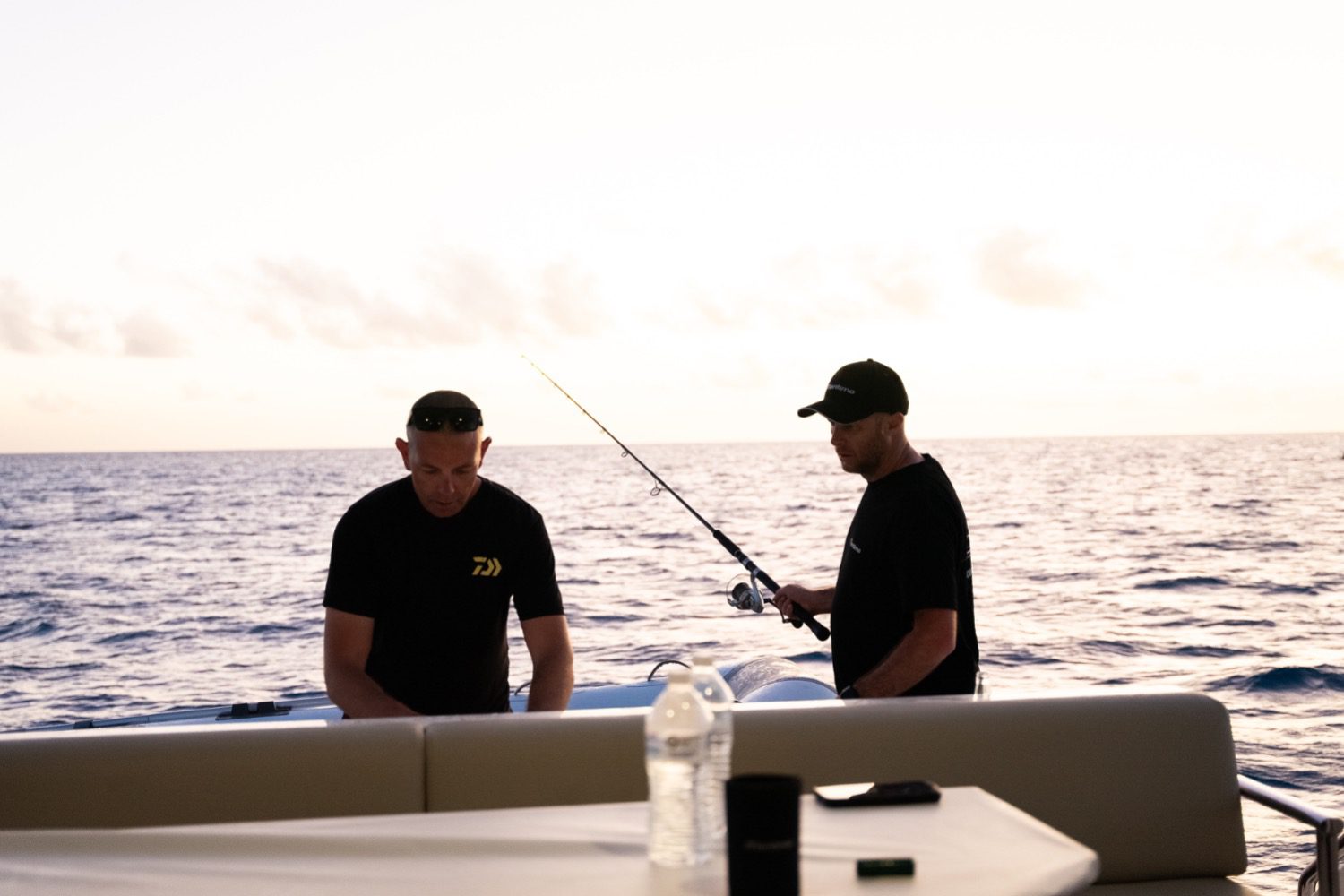
Marine-park zoning and fishing regulations are important considerations throughout the voyage, with sanctuary zones and protected areas requiring attention during passage planning. The same principle applies to the broader environment. The Kimberley remains extraordinary because of its isolation and limited human footprint, and those arriving aboard private vessels have a responsibility to leave anchorages, beaches and waterways as they found them.
Respecting Country
The Kimberley landscape may appear untouched, but it is anything but unoccupied. Aboriginal people have maintained connections with this coastline for tens of thousands of years, and many places visited by cruising boats have profound cultural significance. Rock-art galleries provide some of the most visible evidence, but the connection extends far beyond individual sites to the land, rivers, islands, reefs and sea.
Visitors should check access requirements before going ashore and respect closures, cultural protocols, and Traditional Owner guidance. Doing so adds another layer to the experience. Once the landscape begins to be understood as Country rather than simply wilderness, places that are already visually extraordinary gain a much deeper significance.
Australia’s Great Cruising Adventure
Eventually, the Kimberley must release you. For vessels travelling north-east, Wyndham and the Cambridge Gulf provide a natural conclusion to the coastal passage, while others reverse the journey towards Broome. Either direction works, but what matters is allowing sufficient time. The Kimberley should never become simply a list of destinations to tick off, because the passages between Horizontal Falls, Montgomery Reef, Prince Regent River, Hunter River and King George Falls are every bit as important as the names on the chart.
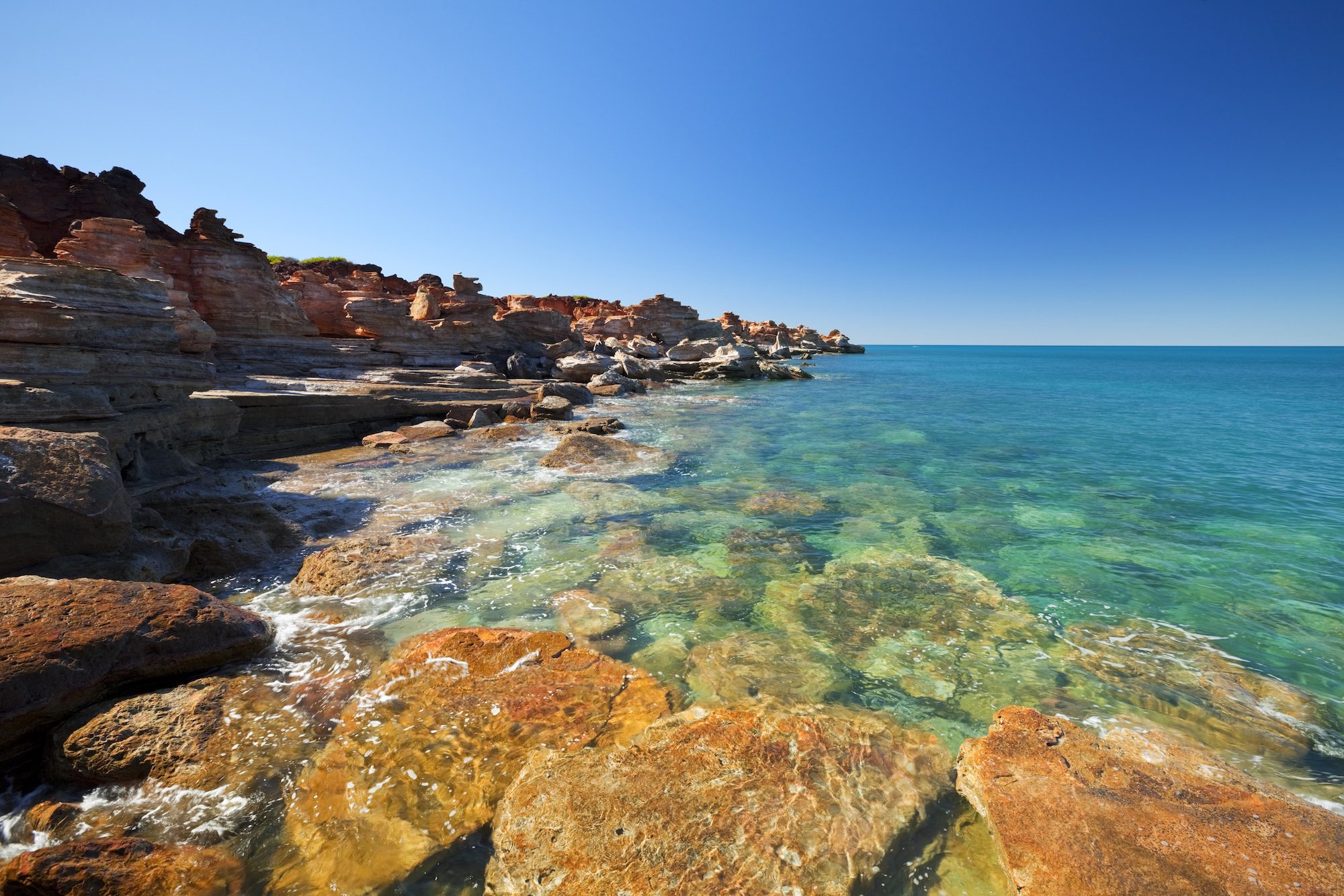
This is a coastline where navigation becomes part of the experience. Tides determine departure times, weather influences anchorages, tenders disappear up creeks, and a productive fishing spot can change the day’s plans. Gradually, schedules become more flexible, and the yacht begins performing the role for which a serious long-range cruising vessel was always intended: not simply taking its owners somewhere, but giving them the independence and capability to stay there, all-the-while delivering the kinds of memories only a Maritimo can deliver.
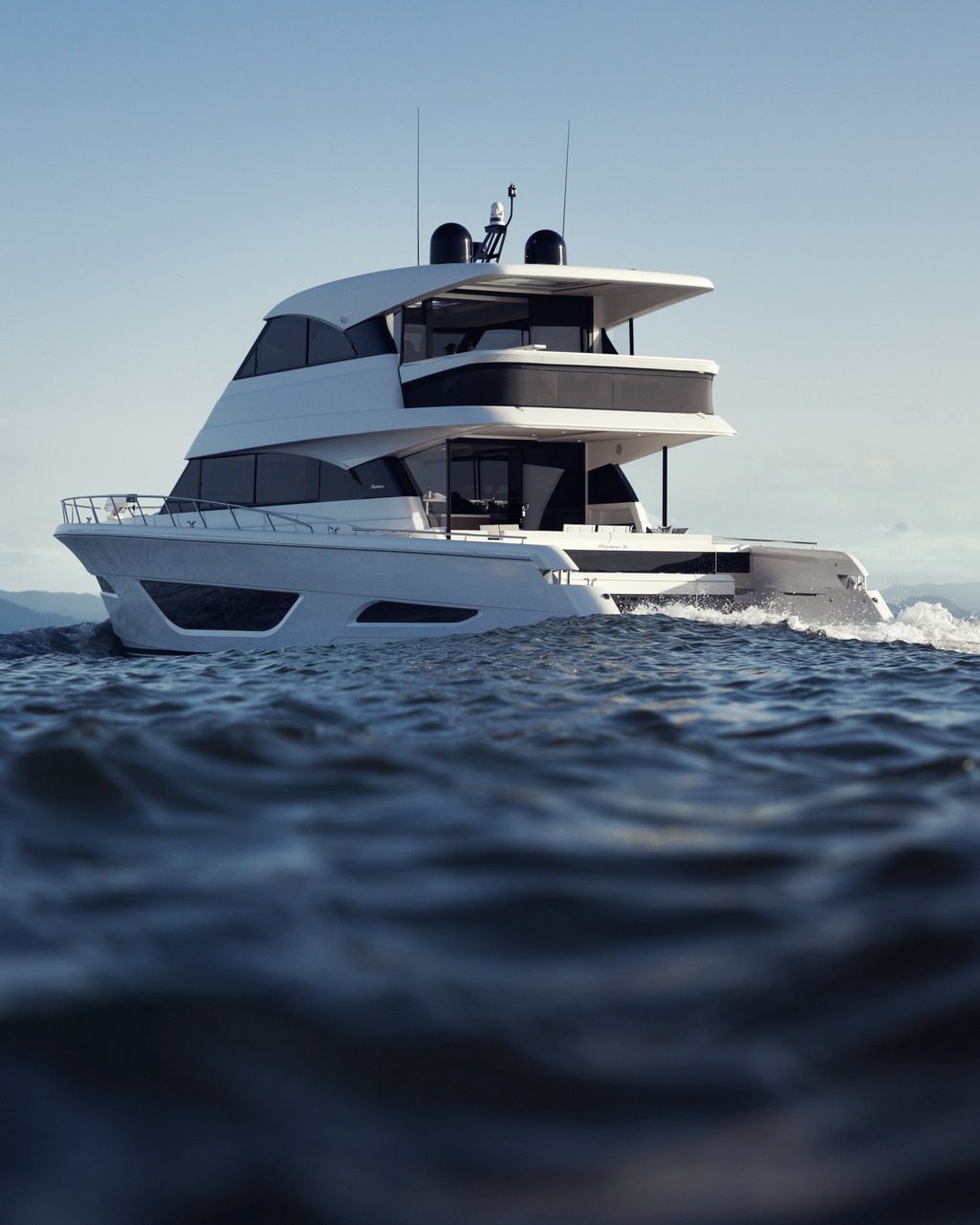
For a Maritimo owner wondering what lies beyond Australia’s more familiar cruising grounds, the Kimberley provides a compelling answer. It is remote without being empty, challenging without being inaccessible, and spectacular on a scale few destinations can match. Prepare properly, understand the tides, respect the Country, and allow enough time. The reward is something increasingly difficult to find in the modern cruising world. A genuine adventure, experienced entirely on your own terms.