For an industry icon like Bill Barry-Cotter, time spent on the water is often inseparable from the hours spent in the engine room of enterprise. Whilst the magnificent vessel that is Maritimo 100 epitomises his latest on-water ambitions, and a return to his sailing roots with his family, Barry-Cotter is a study in relentless forward momentum. Barry-Cotter’s journey from timber boat building to pioneering fibreglass and, ultimately, establishing the Maritimo dynasty, is a fascinating case study in Australian manufacturing persistence against the headwinds of bureaucracy and global competition.
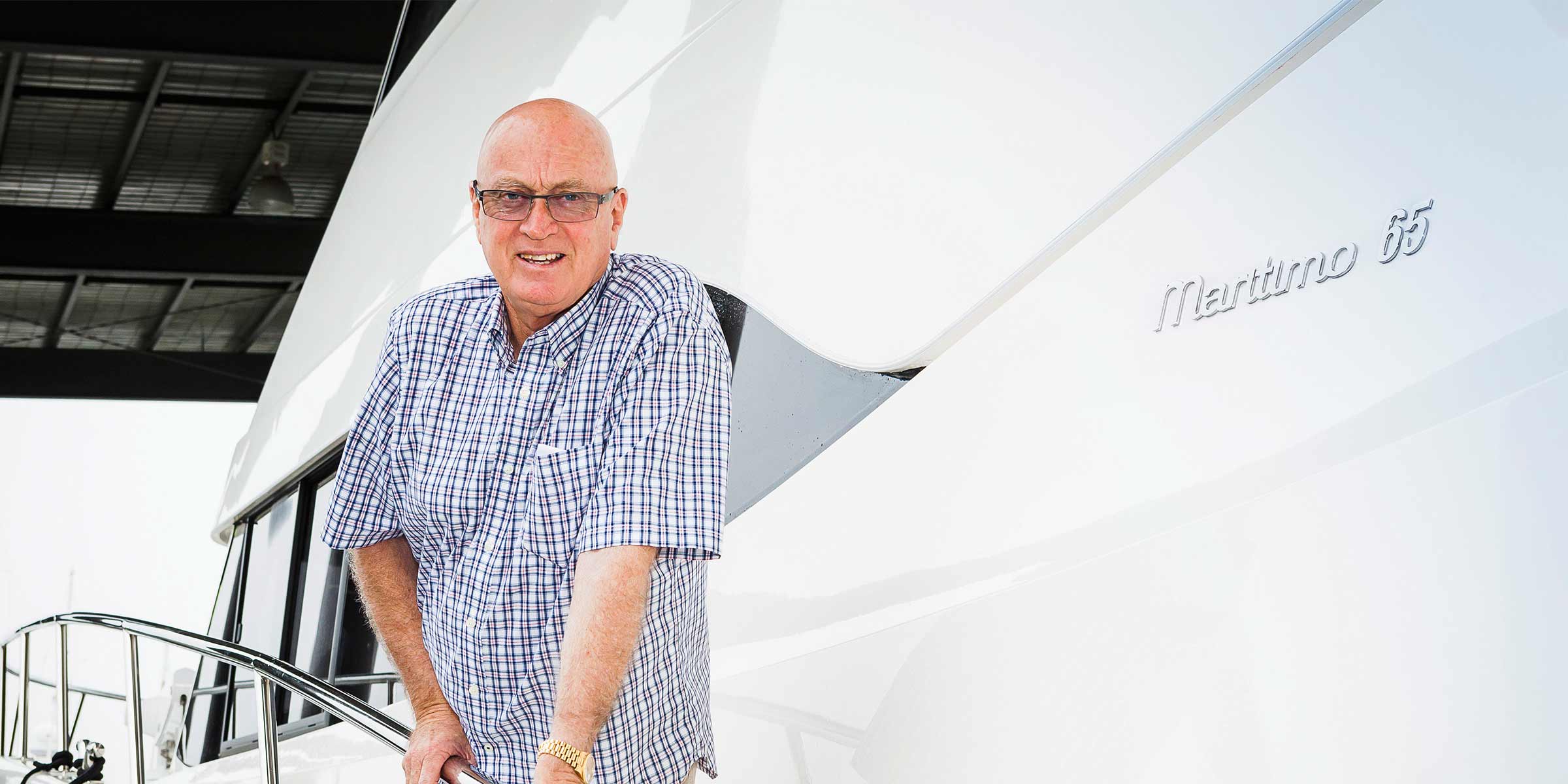
Now in his eighties, Barry-Cotter shows little inclination to slow down. His latest undertaking, the revival of the storied Caribbean brand under the Maritimo umbrella, reaffirms a lifetime defined by invention, persistence and a deep belief in the value of Australian manufacturing. To underscore the overall pace and productivity, it comes swiftly on the back of the new Maritimo M50 luxury flybridge motor yacht, and the soon-to-be-launched luxury sedan version, the S50.
Reflecting on his life’s work thus far, Barry-Cotter says, “It’s been an interesting journey.” In the 60s he was an apprentice timber boatbuilder, then in the 70s pioneered fibreglass hulls, and then this led to the development of family cruisers under the Mariner brand, before culminating just over 22 years ago now with the creation of Maritimo, the pre-eminent brand of long-range luxury motor yachts.
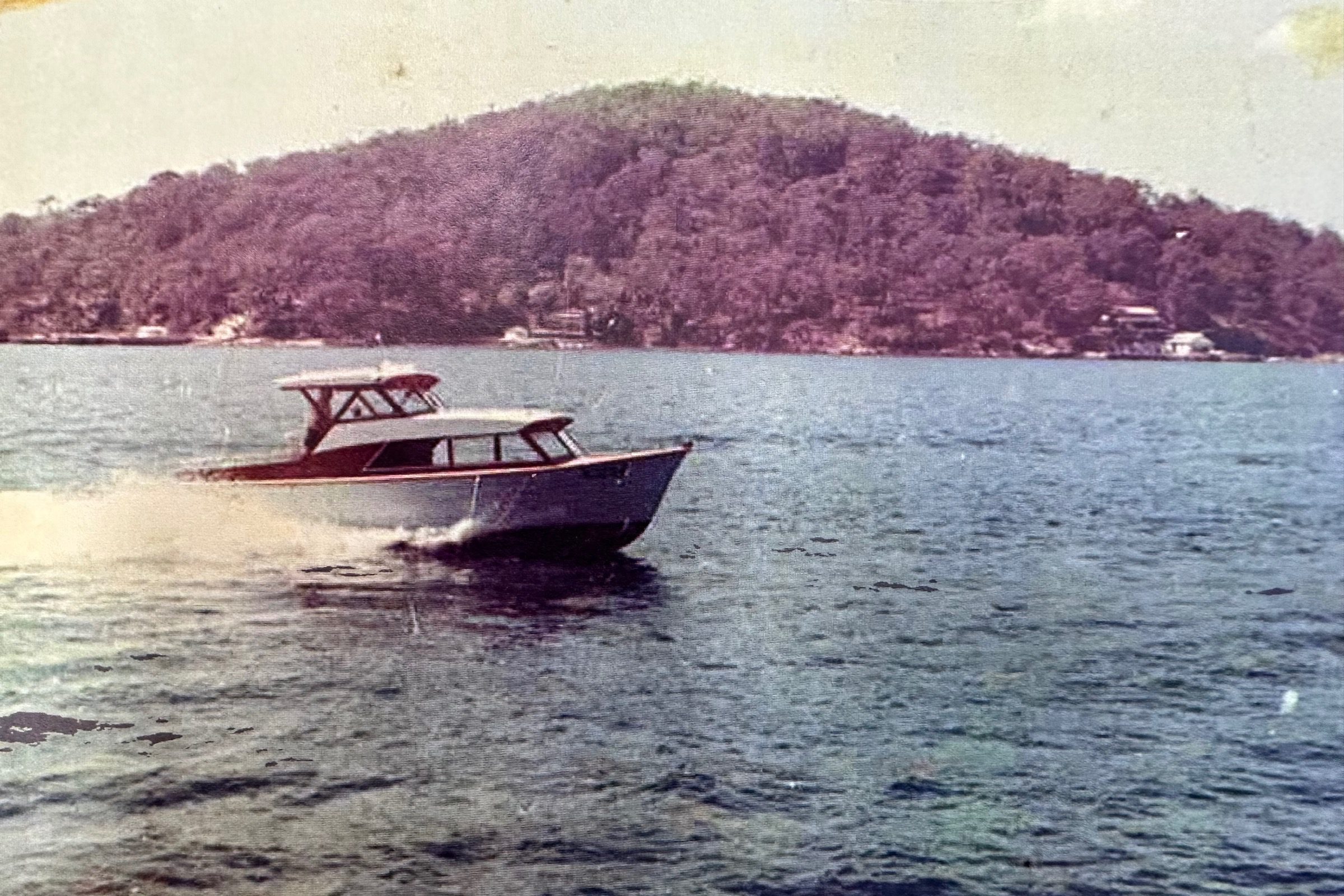
Throughout it all, Barry-Cotter has navigated the shifting tides of technology, economics and regulation. “I was lucky. Fairly early into Mariner we started into fibreglass, which I knew nothing about at the time, so it was a steep learning curve, but by the time I sold Mariner in 1978, we were Australia’s largest boatbuilder. I stayed on for a short period, but like always, it didn’t last.” Yet this was nowhere near the end of one Bill Barry-Cotter AM, who shrewdly moved his entire focus up to the Gold Coast in Queensland, which would rapidly become the epicentre of all things nautical in Australia.
A philosophy of precision
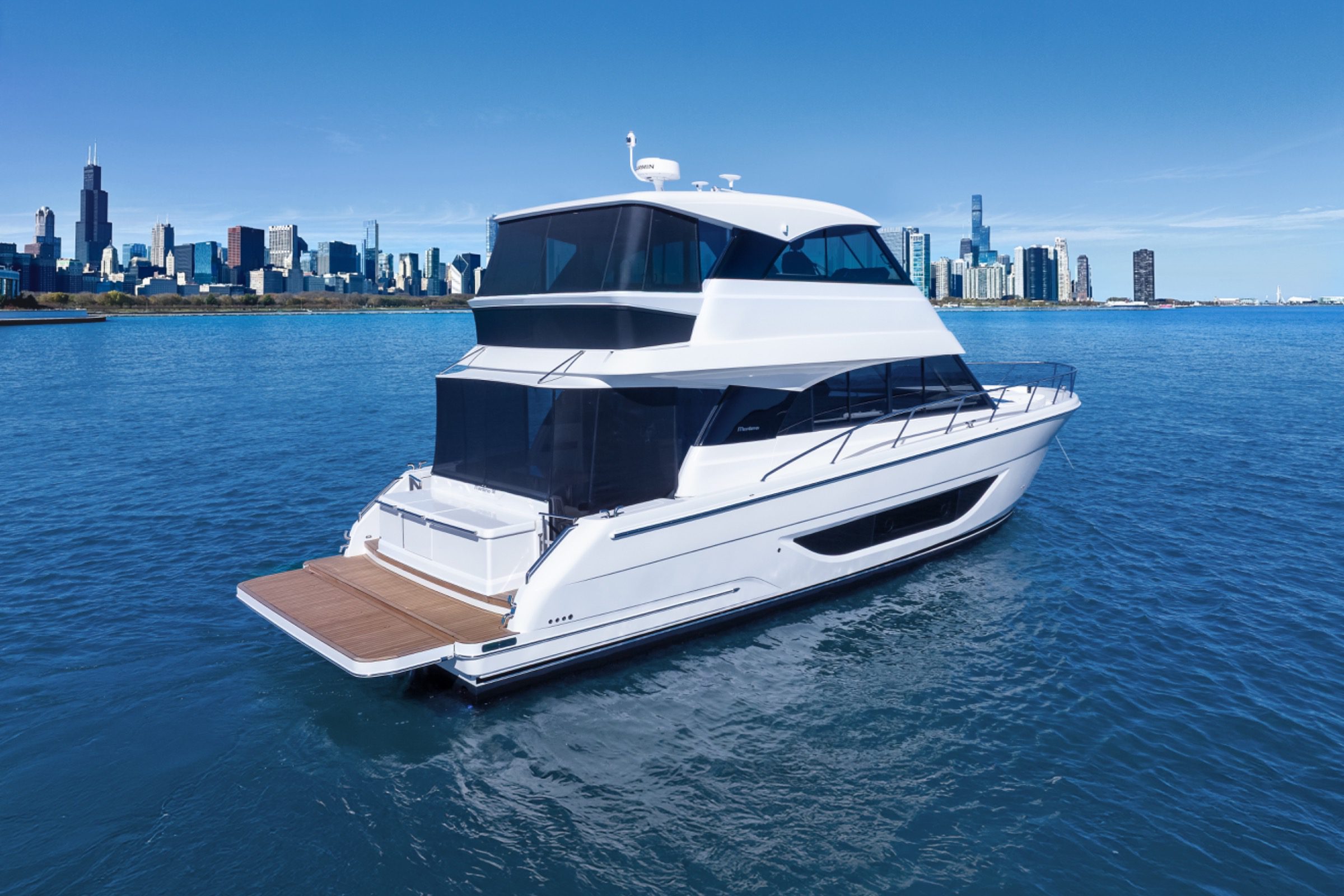
Two decades after its launch, Maritimo remains a rare Australian manufacturer thriving on engineering discipline and long-term vision. At the 2025 edition of the renowned Sanctuary Cove International Boat Show, Maritimo launched the new M50, a yacht that epitomises Barry-Cotter’s insistence that performance and efficiency need not come at the expense of luxury.
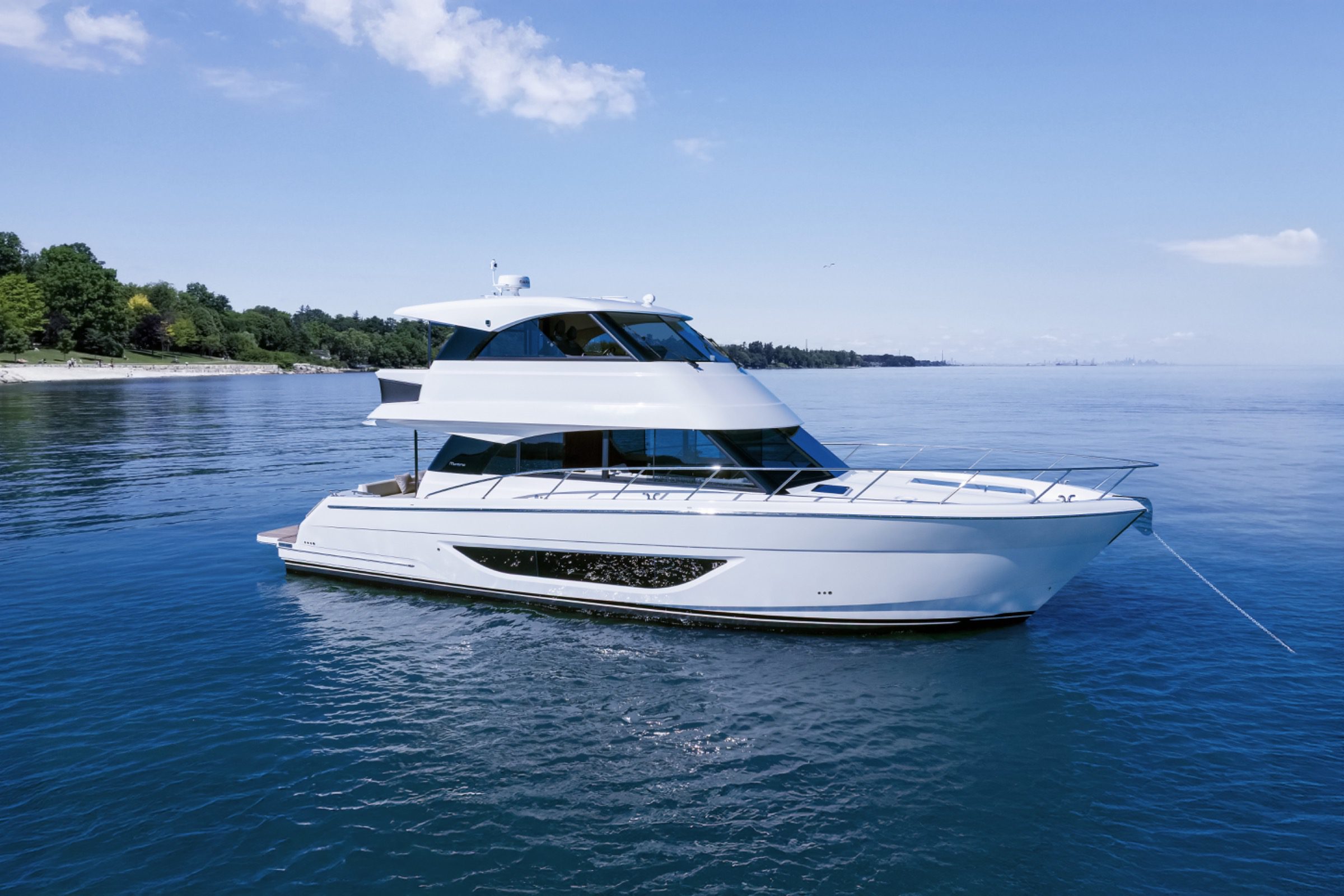
“It’s a terrific sea boat, and very stable. Its inception was as a result of a US Dealer talking with me about how berthing fees doubled once a vessel exceeded fifty-five feet. Currently, there’s a surplus of fifty-foot berths (slips or pens depending on where you are located) and a real dearth of anything above. Our response was to design a yacht that offered the substance of a larger craft whilst officially remaining below the magical fifty-foot threshold.”
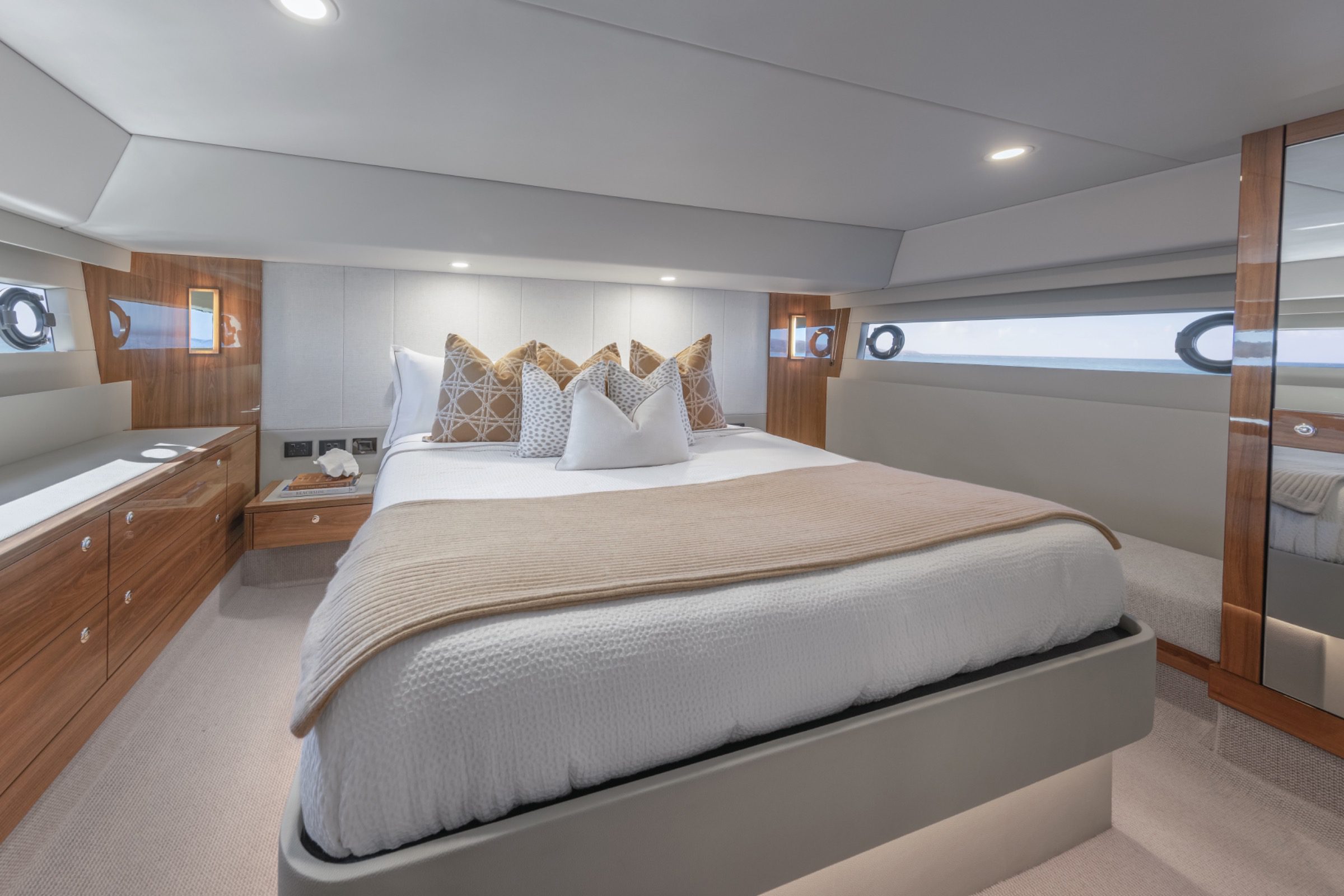
“Space was obviously going to be critical, so we gave the owners the largest Stateroom in the 50’s class, combined with a generous VIP cabin, then creatively set about to deliver more, adaptable sleeping accommodation, as and when required, such as the Ottoman style infill to the lounge in the main saloon.”
“We also engineered the anchor through the deck, where normally there’d be a bowsprit. Also, we hinged the swim platform so that it can rise vertically once clear of the water, and subsequently return 1m (3.3 feet) back to use on the craft itself. The result was a vessel both elegant and efficient: a symbol of how constraint can drive innovation,” said Barry-Cotter.
The discipline of experimentation
In Barry-Cotter’s world, innovation is not a moment of inspiration but an ongoing process of testing and revision. The development of the M50’s hydraulic swim platform illustrates the point. “I said at the start that I thought we’d end up at fifty or sixty prototypes by the time we’re done. Others thought it might be two or three. We’re probably at eighteen or twenty so far.”
“Despite all the CAD drawings, you’ve just got to keep doing it. It does still give me a buzz, when you’re winning, but when you do it three in a row and it fails every time, you think, what the hell am I doing this for?”
Such persistence underpins Maritimo’s competitive strength. “I’m proud that our people love coming to work,” Barry-Cotter says. “That’s what gives you productivity. It takes away the negative side of going to work.”
Standing up to the tide
Barry-Cotter is as candid about the broader challenges facing Australian manufacturing as he is about hull design. Back in 1980, the then-Queensland Premier, Joh Bjelke-Petersen, resolved a shipping impasse at the Port of Brisbane around the export of craft made at Barry-Cotter’s facility in Coomera with a single call to a shipping company executive. “Today, all State and Federal Governments are totally incapable of doing that.”
Free-trade policy, in his view, has left Australian manufacturers exposed. “Before the agreement, utes from Thailand had a five per cent duty, then it went to zero. Whereas for us, sending boats or cars back there only dropped from sixty-five to sixty percent. Totally prohibitive. It’s these sorts of asymmetries that are pushing firms to relocate production offshore.
So, what do you do? Well, you look locally. That’s what.
Even as policy, productivity and cost pressures mount, Barry-Cotter remains resolutely expansionist. His acquisition of the historic Caribbean marque, once the Australian offshoot of Bertram, has injected fresh momentum into Maritimo’s operations, and absolutely captured the imagination of the market.
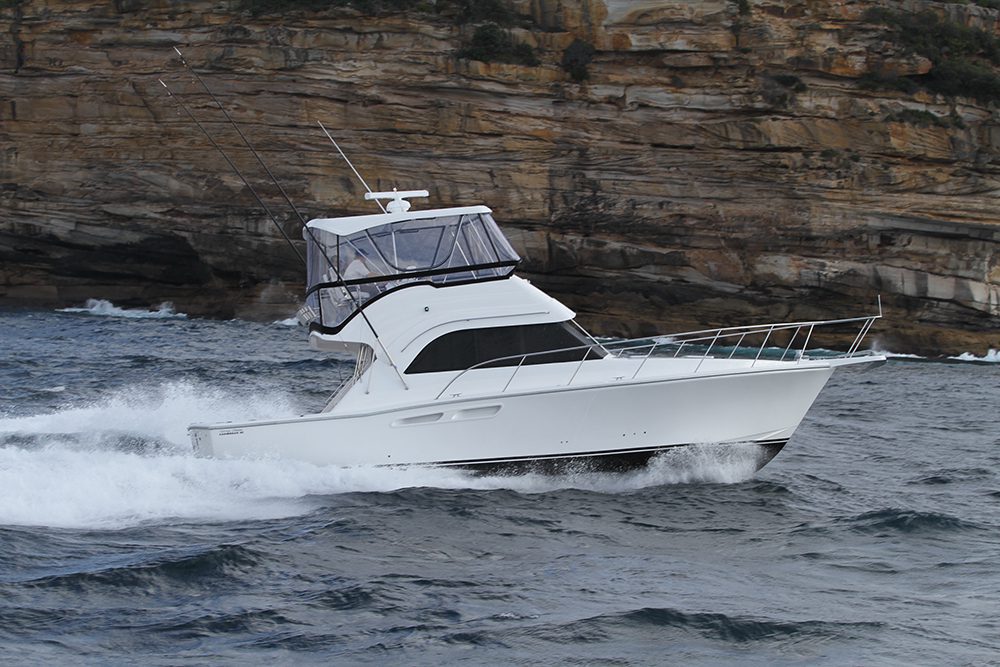
“One of the reasons why I did it, is because it’s in the smaller end of the market, underneath our current Maritimo lineup. You get a bit of protection through the fact that any opposition has got to be imported, and that eats away at margins” said Barry-Cotter
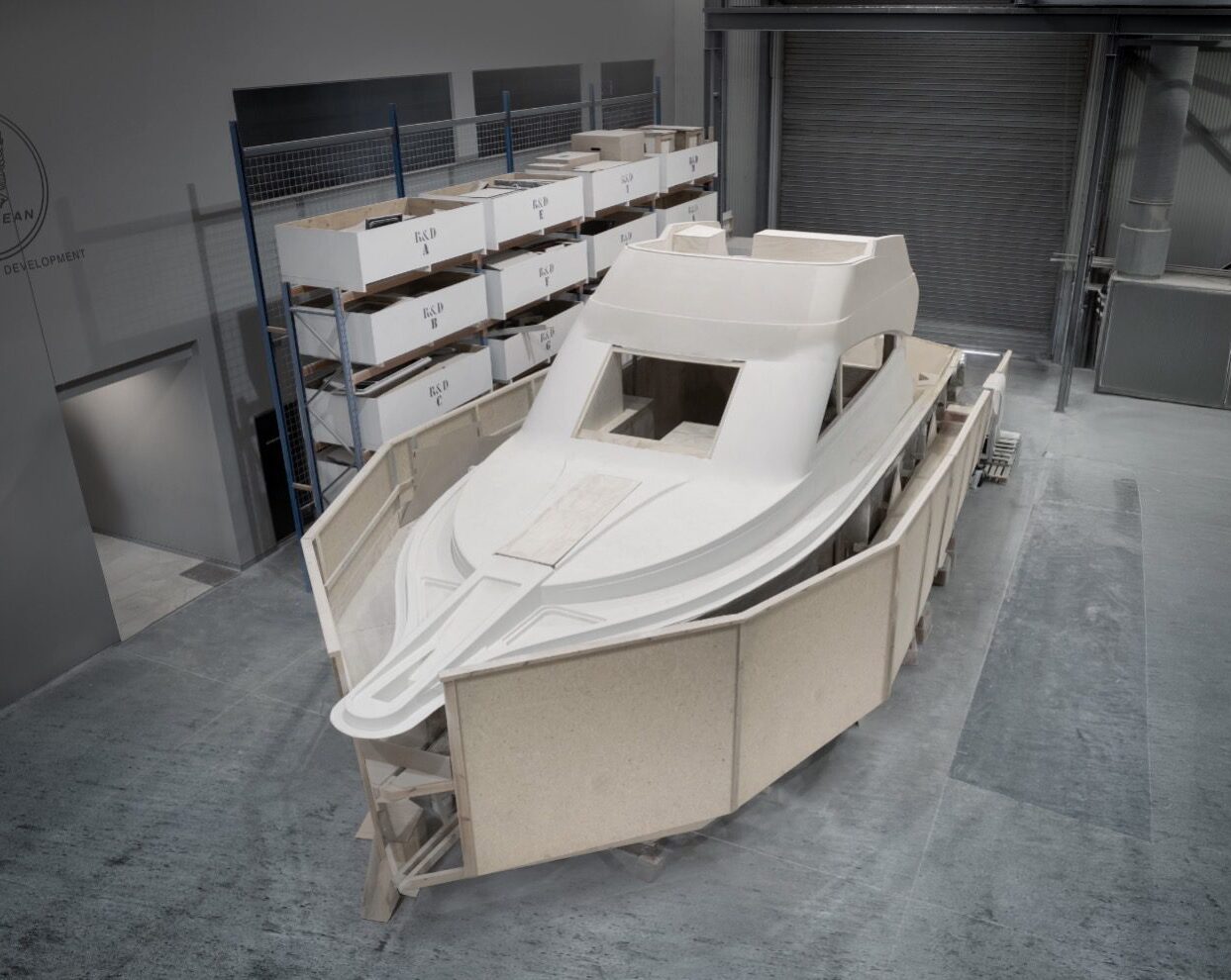
The rejuvenation of the fabled brand inside Maritimo’s Coomera facility is now well advanced. As with Maritimo, Caribbean has spoken directly with dealers and purchasers to hear what they want, and shape the redevelopment. The latter already have deposits down to match their expressions of interest.
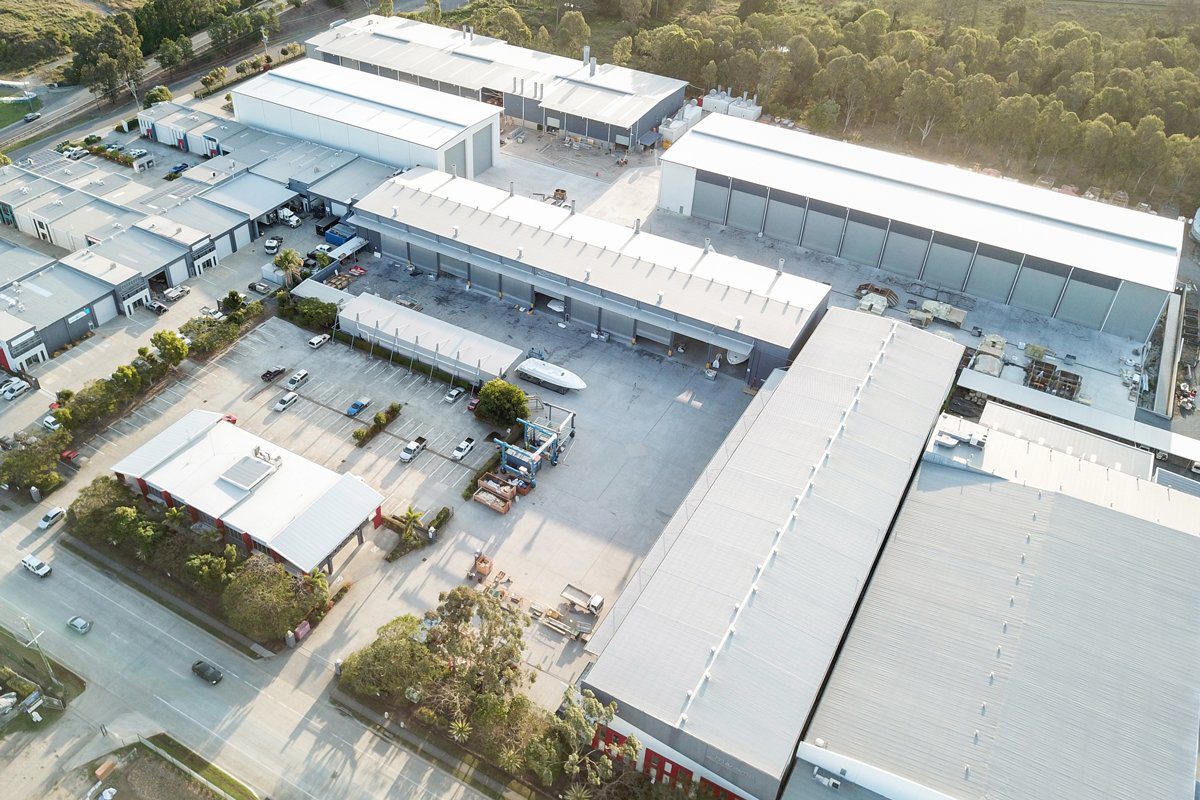
“We know Caribbean craft have got the heritage and the seaworthiness, but everyone wanted more modern amenity. The hulls are incredibly good, but everything from engine rooms to cockpits and internals is being revisited. Many models are receiving new decks and superstructure to account for this. It’s all about future-proofing the brand.”
The first model to emerge will be the C2700 Flybridge, where the four-digit model number designates and outboard powered craft. The new iteration of the renowned Caribbean 27 model will be the start of the new journey. Others will follow. Specifically, C40 and C49. Eventually, Caribbean will span from 21 feet to something in the mid-50s. Our big aim is to have the C2700 and C40 on display at the 2026 Sanctuary Cove Boat Show next May.”
Fresh but familiar, and family all the way…
Just like Maritimo’s revered luxury motor yachts, the Caribbean models will all possess a distinct design identity. “When you see a Maritimo 50 or 75 you know it’s a Maritimo, straight away. The Caribbeans will also have their own identity with a very similar stance and profile, just scaled to size, especially when over 30-feet.”
“The company’s R&D program has intensified accordingly. It’s full steam ahead like it’s never been before, so it is a good thing we know about deadlines. Everyone’s used to building boats to the early hours of the morning two weeks prior to the launch at the show. It’s just what we do,” said Barry-Cotter.

“The Caribbean brand will only be built by Maritimo. As for the italicised lettering on the quarters and the distinctive blue rondelle, well we think it’ll be very similar to what we’ve seen in the past. What matters is that it’s still going to be a Caribbean.”
The pursuit of progress reveals efficiency
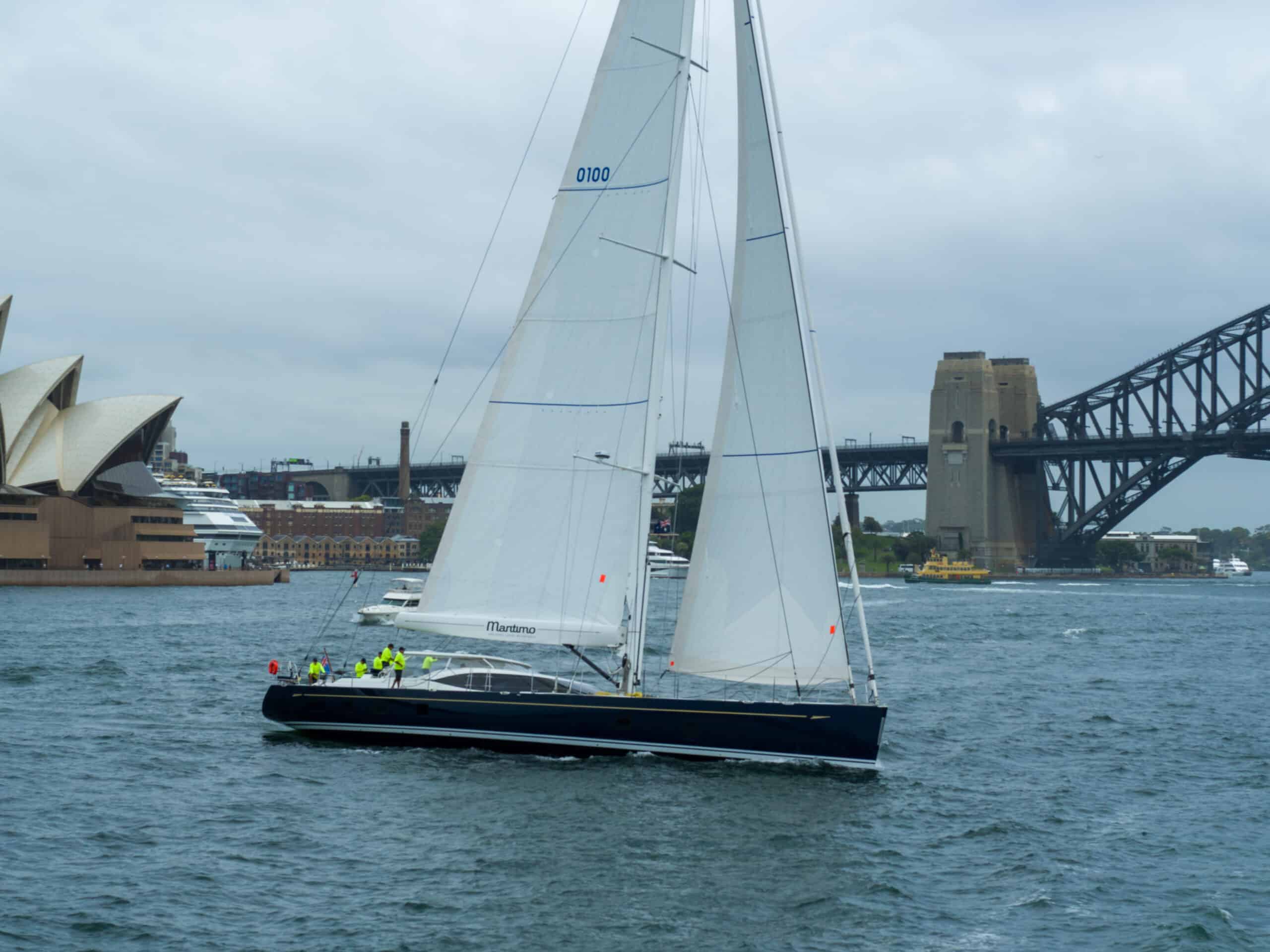
Barry-Cotter’s personal projects continue to double as research platforms. The 100-foot sailing yacht that partakes in the Sydney to Hobart race has, amongst other things, become an experiment in fuel efficiency. After repowering the glamorous and luxury yacht with a new Scania engine, consumption dropped from nearly six litres per nautical mile to just two. “That’s a 30 to 40 per cent saving. It’s a big environmental gain, and a better solution than dragging batteries around with you,” said Barry-Cotter to highlight his pragmatic view of sustainability. One that is grounded in engineering, rather than pure ideology.
Defining a Legacy
Though he now speaks more of systems and policy than of sanding and resin, the spark that drove Barry-Cotter from apprentice to industry icon remains intact. His satisfaction lies not in nostalgia, but in iteration. In seeing each design perform just a little better than the one before.
If the Caribbean project signals a generational shift within Maritimo, it also reaffirms a philosophy that has sustained Australian boatbuilding against global odds. Namely, that craftsmanship, curiosity and calculated risk still matter. “It’s an exciting time. We’ve got the heritage, we’ve got the know-how, and we’ve got the brands that people love.”
Australia’s most determined boatbuilder remains at his post, refining, revising, and pushing toward the next horizon. Bill Barry-Cotter is a man still defined, as ever, by motion.